Alan Stivell — Rare Footage & Clips
In a dimly lit, smoky room in Paris's Latin Quarter, 1964 was a pivotal year for Alan Stivell. The young Breton musician had just released his debut album, Telenn geltiek (Harpe celtique), which would go on to become a benchmark for Celtic music revival. This was the era when traditional folk music from Brittany and Ireland began to seep into the global consciousness, captivating audiences with its mystique and raw emotion.
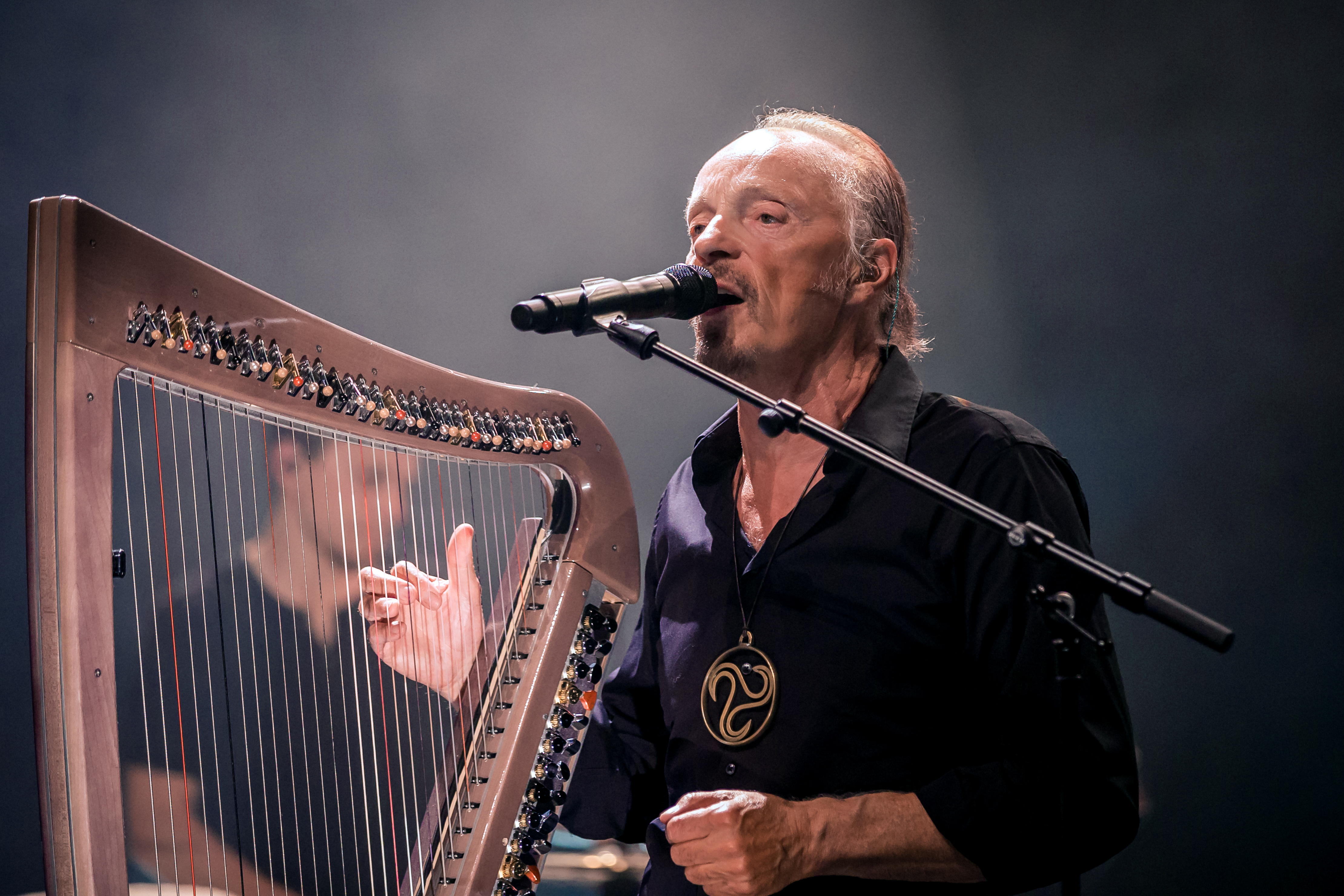
Stivell's early work was characterized by his innovative use of the Celtic harp, an instrument that had been all but forgotten in modern times. His album Telenn geltiek showcased his mastery of this ancient instrument, weaving together traditional Breton melodies with a newfound sense of experimentation and flair. The album's success can be attributed to Stivell's unique ability to balance tradition with innovation, creating a sound that was both rooted in the past and forward-thinking.
One clip from the archive, "Alan Stivell - Telenn geltiek (Harpe celtique) (1964)," provides a glimpse into the album's raw energy. The track features Stivell's haunting harp playing, accompanied by the poignant vocals of his sister, Françoise Ambroisine Cochevelou. This early collaboration would become a hallmark of Stivell's work, as he continued to push the boundaries of Celtic music with his siblings and fellow musicians.
The 1970s saw Stivell's star rise significantly, as he released a string of critically acclaimed albums that cemented his status as a leading figure in the Celtic music revival. Reflets (1970) and Renaissance de la harpe celtique (1971) are notable examples of this period, showcasing Stivell's growing confidence as a composer and performer. His use of the bagpipes and bombard added a new layer of depth to his sound, drawing on traditional Breton music while incorporating modern elements.
Stivell's influence extended beyond the Celtic community, as he became an integral part of the world music movement. His music spoke to a generation seeking authenticity and connection with their cultural heritage. Clips from this era, such as "Alan Stivell - Reflets (1970)," demonstrate his ability to craft songs that were both deeply rooted in tradition and universally relatable.
The mid-1970s saw Stivell's output become increasingly experimental, as he explored new sounds and themes on albums like E langonned (A Langonnet) (1974), Chemins de terre (1974), and Trema'n inis (vers l'île) (1976). These releases marked a significant departure from his earlier work, as Stivell began to incorporate more electronic elements and push the boundaries of what was considered acceptable in traditional Celtic music.
The 1980s saw Stivell's popularity reach new heights with albums like Tir na n-og : Symphonie celtique (1980) and Terre des vivants (1981). These releases showcased his ability to craft sweeping, cinematic soundscapes that drew on his Celtic heritage while incorporating modern production techniques. The clip "Alan Stivell - Tir na n-og : Symphonie celtique (1980)" provides a glimpse into this era's grandeur, featuring Stivell's soaring vocals and the haunting sounds of the Celtic harp.
Throughout his career, Stivell has remained committed to promoting the Breton language and culture. His music has played a significant role in revitalizing interest in traditional Breton music and singing, paving the way for future generations of musicians. As a master of the Celtic harp, he has inspired countless others to explore this ancient instrument, ensuring its continued relevance in modern times.
In 1985, Stivell released Harpes du nouvel âge, an album that marked a new chapter in his career. This release saw him collaborating with a range of international musicians, including guitarist Pierre Bachelet and percussionist François Brune. The clip "Alan Stivell - Harpes du nouvel âge (1985)" showcases the album's eclecticism, featuring Stivell's harp playing alongside a range of electronic and acoustic elements.
Today, Alan Stivell remains one of the most respected figures in Celtic music, his influence extending far beyond the genre. His commitment to preserving traditional Breton culture has left an indelible mark on the world of music, inspiring countless others to explore their own cultural heritage. As a testament to his enduring legacy, the clip "Alan Stivell - Telenn geltiek (Harpe celtique) (1964)" continues to captivate audiences with its raw energy and emotional depth.
In the end, it is not just Stivell's music that has left an impact on history but also his unwavering dedication to preserving traditional Breton culture. His innovative approach to the Celtic harp and his commitment to promoting the Breton language have paved the way for future generations of musicians. As we listen to his music today, we are reminded of the power of cultural heritage to transcend time and geography, speaking directly to our hearts and souls in a way that few other art forms can.
Curated from public records and music databases.